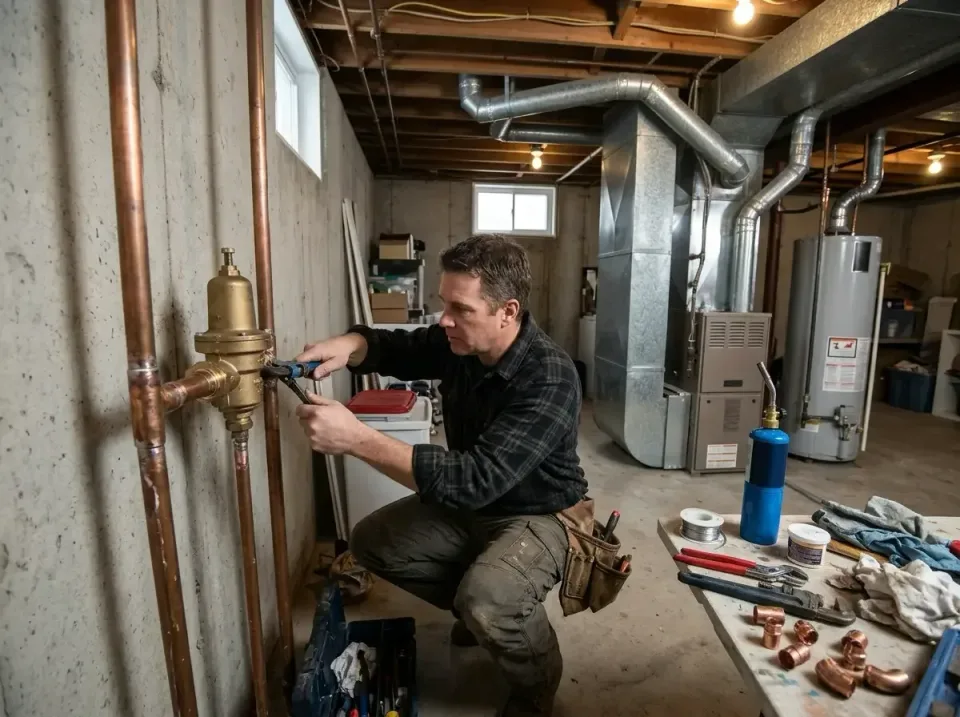
Water Pressure Diagnosis
We test static and flowing pressure for homes; access and the number of test points shape a typical $90–$200 diagnostic visit.
Yes a sticking or obstructed pressure regulator can contribute to an unusually low gauge reading, especially when the gauge is downstream of the valve. But a low number can also point to a bad gauge, a supply issue, or a leak, so the reading needs context before parts are replaced.
A gauge checked with no water running measures a different condition than one checked during use. Spring storms may cause localized flooding, which can affect access to plumbing or expose a separate water-supply concern; note any recent changes before troubleshooting.
Downtown Florence is one of the Alabama communities where we help homeowners distinguish a regulator problem from a broader pressure loss. Downtown Huntsville residents can use the same first step: record where and when the reading appears, then compare fixtures. We verify the cause before recommending a repair.
A gauge that stays low at several fixtures can point toward a regulator, but the number alone does not prove the valve has failed. A pressure-reducing valve limits incoming pressure; if its internal parts stick or the inlet becomes restricted, pressure downstream may fall.
First check whether the gauge is installed before or after the valve, and whether water is flowing during the test. Those details change what the reading tells you.
We have seen homeowners replace a regulator because one gauge looked wrong, only to find that the gauge itself was inaccurate. Alabama rainfall varies across coastal and inland areas, so homes relying on different water sources may face different supply conditions; the source should be confirmed before blaming a valve. A practical Water Pressure Diagnosis compares readings and fixture behavior before repair.
A static reading is taken with no water flowing. A dynamic reading is taken while a fixture is running. If the gauge looks acceptable at rest but drops sharply when water is used, the system may be struggling under demand rather than simply being set too low. Record both conditions and note whether the drop happens at one tap or throughout the house.
The same regulator can behave differently under flow if it is worn or partly blocked. A low reading at one faucet may instead come from a local restriction.
For instance, the kitchen faucet aerator and shutoff valve are sensible checks when the kitchen tap barely trickles but other fixtures seem normal. At Bryant-Denny Stadium in Tuscaloosa, a busy event makes water demand easy to picture; at home, several fixtures running together can reveal whether pressure falls across the system.
Cleaning a faucet aerator is a reasonable DIY check. Opening or adjusting a pressure regulator is a different matter: the valve connects to the pressurized supply, and an incorrect adjustment can leave pressure too low or too high. Stop if you see a leak, hear water hammer, or cannot identify the gauge’s position relative to the valve.
Heavy rainfall can raise groundwater around wells, so a private-well pressure problem may not be a regulator fault at all. The Bellingrath Gardens and Home in Theodore is a familiar coastal-area landmark; nearby homeowners with a well should mention recent heavy rain and changing water conditions when arranging diagnosis.
Our crew checks the water source, gauge, and regulator before explaining options. That sequence avoids replacing a part that was only showing a symptom.
If the gauge is faulty, replacing it may clarify the readings without changing the regulator. If pressure is low both at rest and during use downstream of a confirmed working gauge, regulator inspection or repair may be appropriate. If the issue appears only during demand, we look for a restriction, leak, or supply limitation before suggesting equipment changes.
Chewacla State Park in Auburn gives residents a local point of reference, but the right plumbing fix depends on the home’s actual supply and piping not its location alone. A technician can compare readings at accessible points and explain the likely cause in plain terms.
For persistent weak flow across several rooms, our regulator repair service can assess the valve and surrounding connections. Do not force an adjustment screw to chase a number; confirm the diagnosis first.
The right option depends on where the pressure falls and whether the home uses municipal water or a well; these checks help narrow the cause before choosing a repair.
| Option | Best for | Key detail |
|---|---|---|
| Gauge and pressure test | Uncertain or inconsistent readings | A residential gauge may read 0–200 psi; compare readings with fixtures closed and flowing. |
| Regulator repair | Low pressure downstream of a failing valve | A regulator reduces incoming pressure; confirm the gauge works before replacing the valve. |
| Private well diagnosis | Pressure changes on a pump-fed system | A pressure tank stores water while the pump moves it; inspect both if pressure swings. |
| Booster pump installation | Supply remains inadequate after diagnosis | Booster pumps commonly range from 1/2–2 horsepower; capacity and electrical needs matter. |
Freezing nights can burst exposed pipes and hose bibs, so a sudden low reading after a cold snap deserves a leak check too. For homes near the Alabama State Capitol in Montgomery, a plumber can also explain whether regulated work may require a permit. In Tuscumbia, Ivy Green is a familiar local landmark, but the same practical rule applies: identify the source before choosing equipment.
A clear symptom record helps our technician compare the gauge reading with what the fixtures are doing. Keep the work area accessible.
Drought periods can reduce private well yield, so tell us if your property uses a well and whether the pressure changed gradually or suddenly; around Guntersville City Harbor, that distinction can help frame questions about local well conditions. High humidity can accelerate corrosion on exposed plumbing, making a visual check of accessible connections useful, while hot, humid summers can mean more simultaneous household water use and reveal pressure drops under demand.
| Step | Preparation |
|---|---|
| 1. Locate the shutoff: Find the main water shutoff before the visit and keep its path clear. | |
| 2. Record symptoms: Note affected fixtures and whether pressure changes with water running. | |
| 3. Identify the source: Confirm whether the home uses municipal water or a private well. | |
| 4. Clear access: Make room around the regulator, gauge, pressure tank, or pump if present. | |
| 5. Share recent work: Mention plumbing or utility work that could affect the supply. |
Yes, a pressure regulator can contribute to a low reading during shower use if it cannot maintain flow under demand. Compare the gauge with water off and on, and note whether other fixtures also weaken; frequent thunderstorms can interrupt well pumps and booster systems, so confirm the water source too.
Pressure diagnosis is typically $75–$250, while regulator repair or replacement is commonly $250–$700. Testing and access affect diagnosis, and valve size and labor affect regulator work; Alabama Plumbing Pros can test the system and explain the findings before you approve a repair.
No, do not adjust the valve until you confirm the gauge and water source are working correctly. If several fixtures have weak flow or the reading changes sharply during use, arrange professional testing; Alabama plumbing contractor license requirements are relevant when hiring someone for plumbing work.
Yes, severe storms can interrupt well pumps and leave a well system with inadequate pressure. Frequent thunderstorms may also bring brief power outages, so check whether the pump has power without opening electrical equipment; Birmingham-Shuttlesworth International Airport is one local reference point for the storm-prone region.
Yes, a regulator is possible, but coastal storm conditions can also affect the water supply or pump system. Coastal Alabama faces tropical storm and storm-surge risks, so note the timing of the pressure change and have the source, gauge, and valve checked before replacing parts; a booster pump may not address the actual cause.
A low gauge reading can come from a failing regulator, but a gauge fault, supply problem, or pipe issue can look similar. Compare the reading with fixtures closed and running, then note whether the problem affects one tap or the whole house.
In northern Alabama, occasional hard freezes can damage exposed connections, so mention any cold-weather change when arranging a visit. The University of Alabama in Tuscaloosa is a familiar local landmark; wherever you are in the state, our crew can assess the pressure source and explain the findings before work begins.
For a calm next step, contact Alabama Plumbing Pros at (877) 773-0781 or request Water Pressure Regulator Repair.
Yes, a pressure regulator can contribute to a low reading during shower use if it cannot maintain flow under demand. Compare the gauge with water off and on, and note whether other fixtures also weaken; frequent thunderstorms can interrupt well pumps and booster systems, so confirm the water source too.
Pressure diagnosis is typically $75–$250, while regulator repair or replacement is commonly $250–$700. Testing and access affect diagnosis, and valve size and labor affect regulator work; Alabama Plumbing Pros can test the system and explain the findings before you approve a repair.
No, do not adjust the valve until you confirm the gauge and water source are working correctly. If several fixtures have weak flow or the reading changes sharply during use, arrange professional testing; Alabama plumbing contractor license requirements are relevant when hiring someone for plumbing work.
Yes, severe storms can interrupt well pumps and leave a well system with inadequate pressure. Frequent thunderstorms may also bring brief power outages, so check whether the pump has power without opening electrical equipment; Birmingham-Shuttlesworth International Airport is one local reference point for the storm-prone region.
Yes, a regulator is possible, but coastal storm conditions can also affect the water supply or pump system. Coastal Alabama faces tropical storm and storm-surge risks, so note the timing of the pressure change and have the source, gauge, and valve checked before replacing parts; a booster pump may not address the actual cause.
Browse all nationwide service options and choose the right fit for your project.
We test static and flowing pressure for homes; access and the number of test points shape a typical $90–$200 diagnostic visit.
We repair residential booster pumps, checking pump controls and connections; repair costs depend on pump size, parts, and access, with many jobs around $150–$500.
We trace sudden pressure loss for homeowners, checking household supply and connections; storm interruption near Point Mallard Park or Toomer's Corner can affect pumps and systems.
We install residential booster pumps sized for the system; typical projects run $800–$2,500, depending on pump capacity and electrical work.
We clear showerhead restrictions and address weak flow; typical repairs run $150–$500, depending on access and parts. Southern Alabama winters are mild, but summer irrigation can strain household use.
We restore weak well pressure for homeowners, checking pump controls and pressure equipment; typical repairs run $150–$1,200, depending on parts and well access.
We repair leaking home water lines, including buried sections; typical jobs run $300–$2,000, driven by leak location and excavation access.
Hot-water flow repairs for homes, including checks of heater connections and hot-side piping; scope and access shape the job cost.
Clogged water pipe repair clears debris and scale from residential lines; typical jobs run $150–$600, depending on pipe access and blockage severity.
We repair or replace residential pressure tanks, including tank and piping work; replacement commonly runs $500–$1,500, depending on tank capacity and piping access.
We repair or replace residential pressure regulators, including brass valves; typical work runs $250–$700 depending on valve size and labor. Nearby Bellingrath Gardens and Home, Bryant-Denny Stadium, and Chewacla Stat...
We repair whole-house filter housings, seals, and cartridge connections; Chewacla, the Tennessee Valley Museum of Art, and the University of Alabama help orient statewide service.
Well pump repairs for homeowners cover pump and control issues; typical jobs run $250–$1,200, depending on equipment access and parts.
Select a city to find local low water pressure repair providers we cover in Alabama.
Share your job scope for low water pressure repair in Alabama — we will review fit and pricing before scheduling.